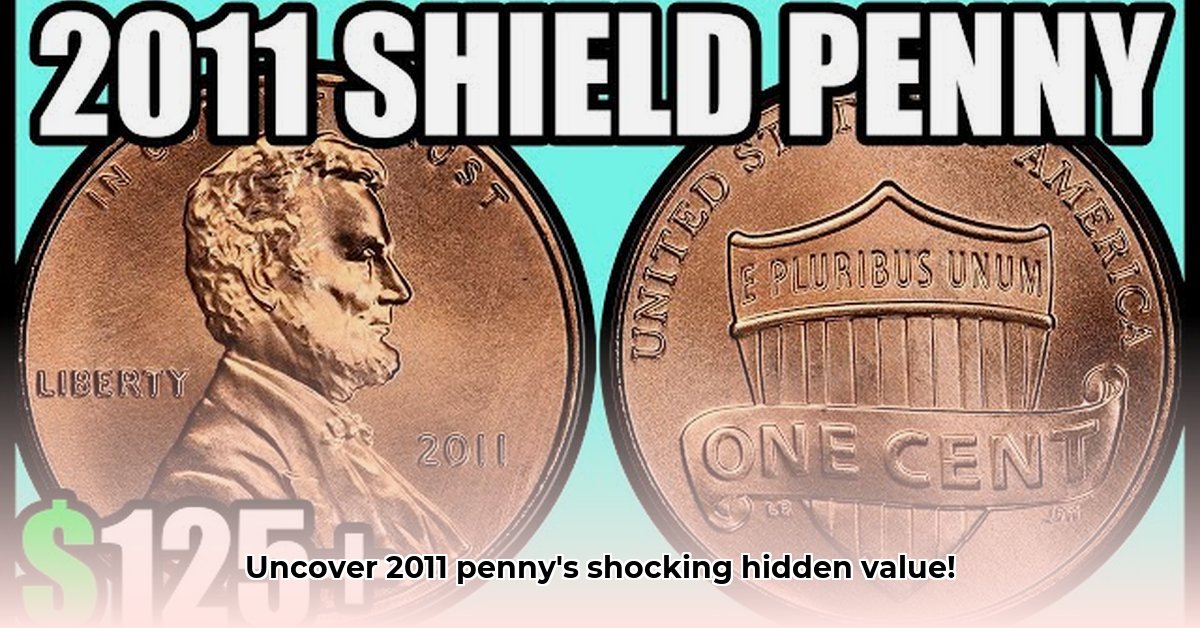
Have you ever considered the potential value hidden within your loose change? That seemingly insignificant 2011 penny might be worth more than a cent. This guide will explore the factors influencing 2011 penny value, helping you determine if your pennies are worth more than face value. We'll cover mint marks, error coins, coin condition, and offer a step-by-step guide to assessment. For more on valuable coins, check out this guide on rare currency.
2011 Penny Value: A Detailed Examination
The value of a 2011 penny hinges on several key factors. Let's delve into the details to uncover the potential hidden within your pocket change. Understanding these factors will allow you to accurately assess the worth of your coins.
Mint Mark Significance: Location, Location, Location
The mint mark—a small letter (P, D, or S) indicating the production location—is the first clue to a penny's value. Billions of Philadelphia (P) and Denver (D) minted pennies circulated in 2011, making them generally worth only one cent. In contrast, the 2011-S penny, minted in San Francisco as a proof coin (a higher-quality finish), commands a higher value due to its lower mintage. These can fetch between $2 and $5, depending on condition. This illustrates how a small detail significantly alters a coin's worth. Is there a small letter on your penny? Examining this detail is your first step to uncovering its potential hidden value.
Error Coins: The Potential for High Value
Minting errors create unique and valuable coins. These errors, resulting from imperfections during the production process, include doubled images, off-center strikes, and other anomalies. While rare, these errors can dramatically increase a penny's value. Some error coins can sell for hundreds, or even thousands, of dollars at auction. Could your 2011 penny have such an error? Knowing what to look for is paramount.
Condition is Key: Preservation and Value
A coin's condition significantly impacts its value. A pristine, uncirculated penny (showing no wear and tear) is far more valuable than a well-worn, circulated one. Professional grading services, such as PCGS (Professional Coin Grading Service) and NGC (Numismatic Guaranty Corporation), use standardized grading systems to objectively assess a coin's condition and determine its precise value. While online resources offer estimates, professional grading provides the most accurate assessment, especially crucial for error coins or those in exceptional condition. Remember, condition is a key determinant of value; a pristine coin holds greater worth.
Assessing Your 2011 Pennies: A Step-by-Step Guide
Identify the Mint Mark: Carefully examine your penny for the mint mark (P, D, or S).
Check for Errors: Look closely for any unusual features such as doubled dies, off-center strikes, or other imperfections.
Assess the Condition: Evaluate the wear and tear. An uncirculated penny will fetch a significantly higher price.
Consider Professional Grading: For potentially valuable pennies, particularly those with errors, professional grading provides an objective assessment and accurate valuation.
2011 Penny Value Summary Table
This table provides an estimated value range for 2011 pennies. The actual value depends heavily on condition and the presence of any minting errors.
| Mint Mark | Approximate Mintage | Typical Value Range (Estimate) | Error Coin Potential |
|---|---|---|---|
| 2011-P | Billions | $0.01 - $0.30 | High |
| 2011-D | Billions | $0.01 - $0.30 | High |
| 2011-S | Millions | $2.00 - $5.00 | Moderate |
Important Note: Understanding the Market
Remember that these values are estimates. Actual values fluctuate based on several factors, including condition, error type (if any), and current market trends. The numismatic market is dynamic; consult multiple sources and consider seeking expert opinions for accurate assessment. The thrill of discovering value is often as rewarding as the treasure itself! Happy hunting!